
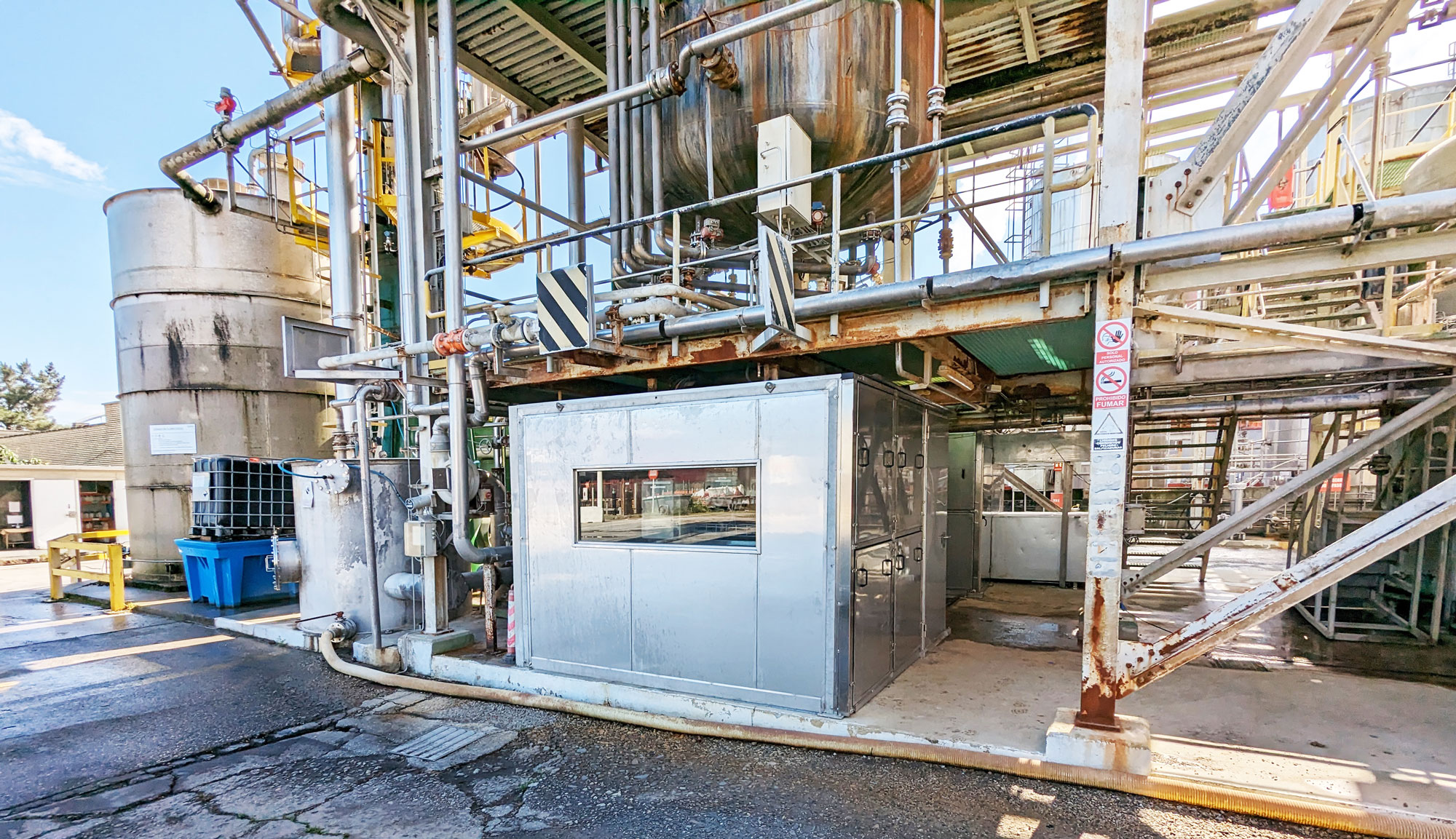
An acoustic impact study is essential when multiple noise sources accumulate within the same environment, as it helps determine precisely which elements generate the highest sound impact. This was the objective in a pulp and energy generation plant in Asturias, where we carried out a comprehensive acoustic analysis.
This facility operates continuously, 24 hours a day, and is located near residential areas, where noise conflicts can easily arise. In any case, the sound levels established by current regulations must always be met, varying according to the area in which the activity is located.
Identification of Critical Sources: Preliminary Analysis and Planning
In anticipation of the plant’s planned expansion—which would add new noise sources and increase the demands of regulatory compliance—we performed an exhaustive analysis of the acoustic situation.
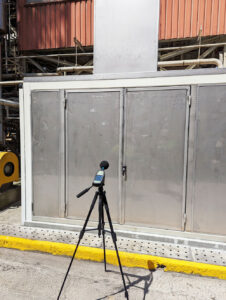
Based on the data obtained from individualized measurements, we identified 99 noise sources, allowing us to prioritize actions and design the most effective acoustic solutions.
The creation of a noise map was key to predicting the plant’s overall acoustic behavior and assessing expected noise levels once the corrective measures were implemented.
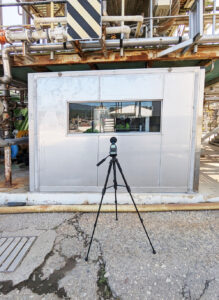
Prioritizing the Loudest Sources and First Actions
After simulating the full operation of the plant, we verified that sound emission levels exceeded the limits set by current regulations. From there, we analyzed the most critical areas, focusing on the noisiest sources.
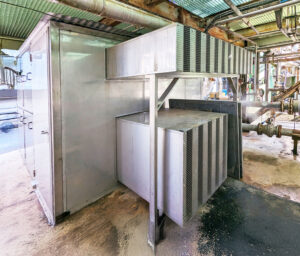
We began by encapsulating two blower groups located outdoors, each consisting of two units that did not operate simultaneously. Each blower was enclosed independently within its own housing, integrated with two rectangular dissipative silencers that provide the necessary ventilation without compromising acoustic attenuation.
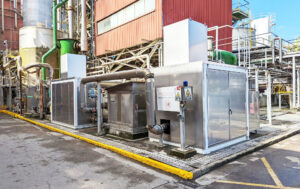
These measures achieved a significant noise reduction in the treated areas and represented a first step toward overall compliance.
Replacing the Acoustic Enclosure on an Elevated Motor
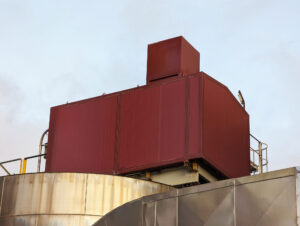
In addition to the blowers, we acted on a motor located above a tank, supported by a tramex-type metal structure and covered by a small roof.
This equipment already had a previous acoustic solution, made up of high-efficiency panels installed on a self-supporting metal frame. The original enclosure included an acoustic door, an inlet silencer on the front wall, and an outlet silencer on the roof.
The previous solution was dismantled and replaced with a new, more efficient acoustic enclosure, maintaining the operational functionality of the equipment. At the client’s request, the front wall was removed, leaving that side open. Despite this modification, the noise reduction achieved was notable, with values exceeding 10 dB at this source.
Technical Analysis as the Basis for an Effective Acoustic Impact Strategy
When a facility has a large number of noise sources, it is essential to have a clear understanding of which ones contribute the most to the overall level. This allows for a strategic and technical approach, maximizing the effect of each intervention.
In this case, through individualized measurements of each source and predictive simulations, we established a roadmap for progressive noise reduction. The applied solutions did not affect the plant’s normal operation and were adapted to the real working conditions of each piece of equipment.
Once the prioritized actions were executed, verification measurements were taken. All treated equipment recorded reductions greater than 10 dB, reaching up to 27 dB in one of the blower enclosures.
Progressive Planning and Custom Solutions for Each Source
Although the measures implemented have already produced a tangible improvement in noise levels, additional interventions are still needed to fully comply with the regulations. That is why it is crucial to plan by phases, prioritizing actions based on each source’s acoustic contribution.
This type of work cannot rely on general estimations. It requires objective data, on-site measurements, simulations, and a strategy adapted to each plant. This ensures that technical and economic resources are distributed intelligently, allowing every investment to have a real impact on noise reduction.
Do you have multiple noise sources in your plant and need to know where to start?
We will analyze each sound source. Contact us.